
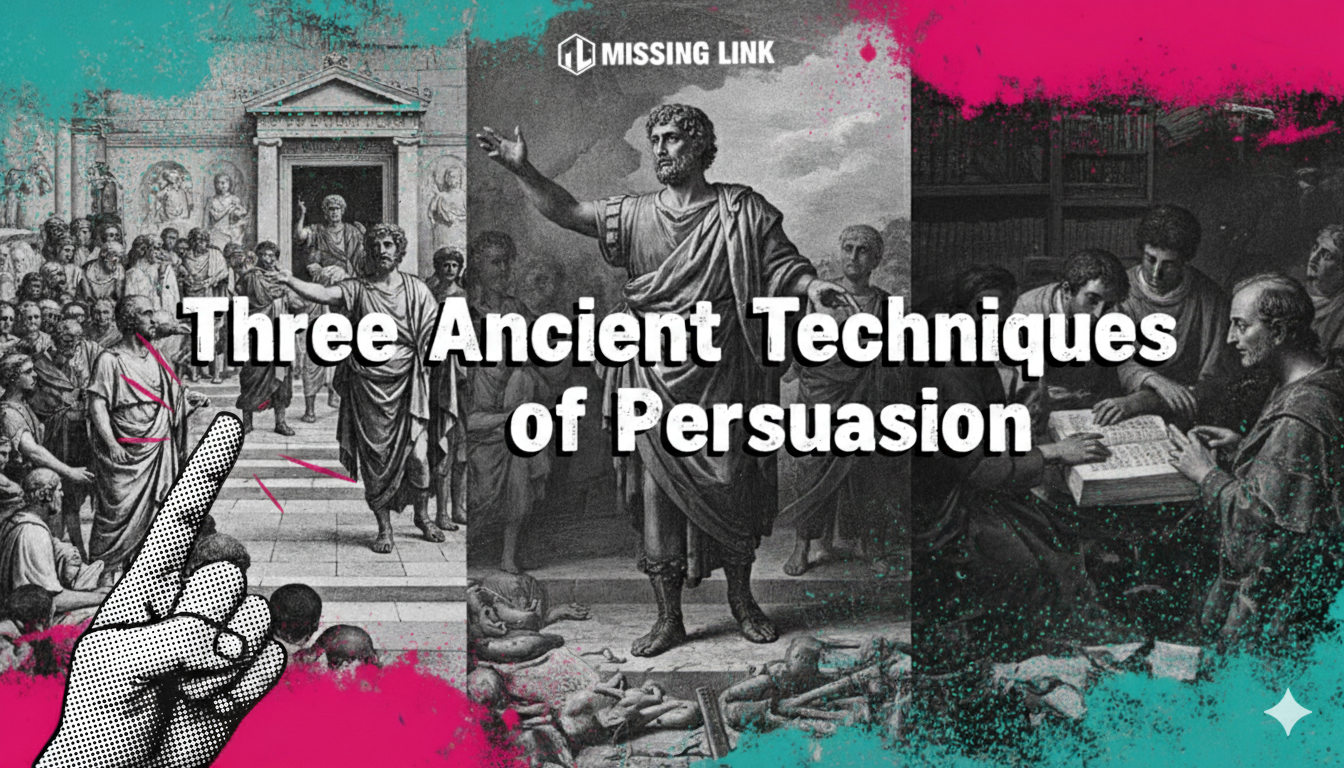
Here is the truth most people never hear: there is no single magic trick to persuasion. No Jedi mind trick. No one-liner that closes any deal. But there are three ancient techniques that, when used together, can turn your communication into something people feel, remember, and act on.
Over 2,000 years ago, a Greek guy named Aristotle, basically the OG communications coach, figured this out. He called them Logos, Pathos, and Ethos. Today, we call them Head, Heart, and Gut.
Head (Logos):
This is logic. The “why” that gives your audience’s brain a reason to agree. It is the data, the examples, the structure. Most corporate presentations stop here. They throw slides full of facts and graphs and wonder why no one cares. Because logic alone does not move people, it just informs them.
Heart (Pathos):
This is emotion. The feeling that makes logic matter. It is the story that pulls someone in, the image that sticks in their mind, the spark that makes them care. If logic is the engine, emotion is the fuel.
Gut (Ethos):
This is trust. Your credibility, confidence, and character. If your audience does not believe you, they will not believe your message. People buy into the messenger before the message.
The power is in the mix. Use head to make sense, heart to make them feel, and gut to make them trust you. That is persuasion in its purest form, and the best communicators in history have all mastered it.
If you are tired of people zoning out when you speak, or if you want to turn your presentations into something that moves hearts and opens wallets, we built a Persuasive Communication Masterclass that shows you exactly how to blend these three elements in your talks, pitches, and meetings.
Because persuasion is not a gift. It is a skill, and you can learn it.

